
Have you ever been scrolling through TikTok and suddenly stopped at a “POV” video that made you feel like you were actually part of the moment? As if you had stepped directly into the scene and become part of the story.
Sometimes it makes you laugh. Other times, it pulls you in so deeply that it brings tears to your eyes. There’s no denying that POV content can evoke a wide range of emotions. More than just a trending format, POV has become a powerful communication and engagement tool in the digital era.
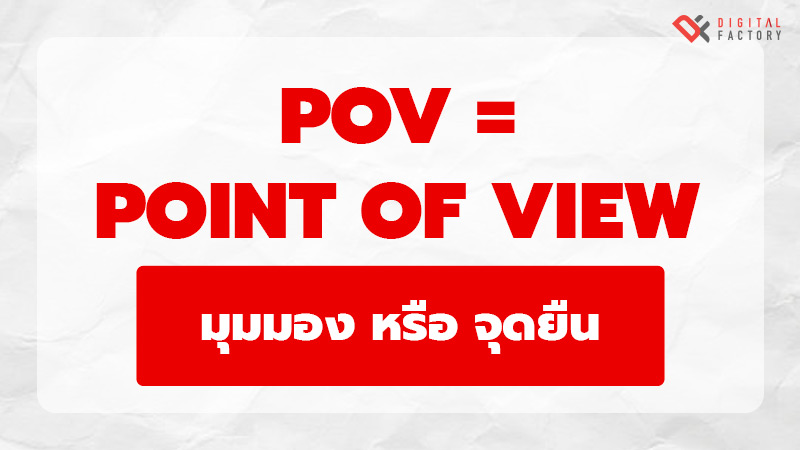
What is POV?
“POV” stands for Point of View, which means perspective or standpoint.
This term has been widely used across various fields, including literature and film. Today, it has become especially popular on social media—particularly on platforms like TikTok.
Meaning of POV on Social Media
In the world of social media, POV refers to a content format that makes viewers feel as though they are part of a specific situation or experiencing events from the creator’s perspective.
This approach helps audiences feel more connected to the creator and better understand the context of the content. Additionally, POV content encourages engagement by sparking conversations and interactions—whether between viewers and creators or among viewers themselves.

How Many Types of POV Are There?
POV, or Point of View, in storytelling comes in various forms. Each type delivers a different perspective and emotional experience. However, in general, POV is divided into 4 main types as follows:
1. First Person Point of View
The first person point of view tells the story through the eyes of the character, using pronouns such as “I” or “we.” This allows readers to feel as if they are inside the events alongside the main character, directly experiencing the character’s thoughts, feelings, and personal experiences.
This perspective creates a strong sense of intimacy and deep connection with the character. Additionally, storytelling from a character’s direct perspective can make the narrative feel more realistic and believable.
Example of using the First Person point of view: Many novels use this perspective, such as “I walked into the restaurant feeling excited,” or “Today is the best day of my life,” allowing readers to feel like part of the story.
2. Second Person Point of View
The second person point of view differs from other perspectives because the narrator speaks directly to the reader, making them feel invited into the story. It uses the pronoun “you,” unlike first person, where the character narrates from their own perspective.
Example of using the Second Person point of view: Many interactive games use this format, such as “You walk into a dark room, move to the end of the hallway, and find a closed door.”
3. Third Person Omniscient (God’s Eye View)
The third person omniscient point of view is when the narrator is all-knowing—like a “god” who has access to the thoughts, feelings, and personal information of every character. The narrator can see all events happening anywhere in the story and can shift perspectives between characters freely.
This allows readers to receive comprehensive information and gain a deep understanding of the storyline.
Example of using the Third Person Omniscient point of view: Many historical or fantasy novels use this perspective to provide a broad understanding of historical contexts or imagined worlds. For example:
“The soft sunlight shone on the face of the young woman sleeping beside her lover. Her heart was filled with hope and grand dreams, yet she did not know that her life would change forever today.”
4. Third Person Limited Point of View
The third person limited point of view allows readers to see events and emotions through the eyes of only one character. Unlike first person or third person omniscient, this perspective restricts the narrative to a single character’s thoughts and experiences.
This limitation creates a closer bond with the main character and helps readers understand the character’s motivations more deeply.
Example of using the Third Person Limited point of view:
“She walked along the deserted street, a gentle breeze brushing against her face. She felt lonely and isolated. Suddenly, she heard footsteps behind her. She quickly turned around—but saw no one.”
Or: “His big round eyes stared out the window. A faint smile faded as he thought about the toy he wanted. He gently bit a coffee bean in his mouth, feeling slightly restless.”
It should be noted that POV content on TikTok does not strictly follow the formal storytelling structures described above. Instead, it focuses on creativity and flexibility. Popular POV formats on TikTok include:
- POV storytelling: One of the most popular formats, where creators tell stories from their own perspective—such as love stories, relationships, life experiences, horror stories, or humorous situations.
- POV scenario creation: Creators invent fictional situations and place viewers inside them, such as being a student taking an exam, an idol being followed by sasaeng fans, or a character in a movie.
- POV answering questions: Creators respond to common questions in a POV format, making viewers feel like they are having a one-on-one conversation.
- POV following trends: Creators participate in trending topics on TikTok and adapt them into their own POV style.
- POV teaching something: Creators teach skills such as cooking, makeup, exercising, or installing new applications on smartphones and tablets, presented in a POV style so viewers feel like they are learning with a friend.
- POV entertainment: Creators make POV clips focused on fun and humor, such as acting silly, impersonating celebrities, or delivering jokes.
Conclusion
As you can see, POV is not just a trending format on TikTok—it is also a powerful tool that can make your brand stand out from the competition.
If you want your brand to be memorable, consider consulting experts in online marketing services to create impactful POV content that truly resonates with your target audience.