

Did you know? When creating digital products—whether websites, applications, or software—the first crucial step is building a wireframe. A wireframe defines the structure and core elements of a product before moving on to graphic design or coding.
To help you understand the importance of wireframes and apply them effectively in your digital projects, this article will guide you through everything you need to know—from the definition and types of wireframes to the tools used to create them.
What Is a Wireframe?
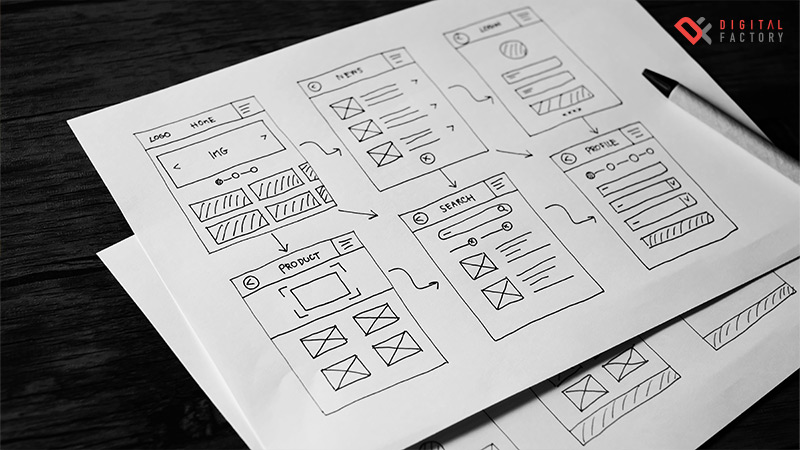
A wireframe is a basic blueprint of a website, application, or other digital product. It outlines the structure and main components of the product before any visual design is applied.
A wireframe focuses on the layout of elements on the screen—such as headings, buttons, menus, images, and content—showing where they are placed and how they relate to one another.
Types of Wireframes
Wireframes can be categorized based on their level of detail. Each type serves a different purpose in the design process:
1. Low-Fidelity Wireframe
A low-fidelity wireframe is the simplest and least detailed version. It is often sketched by hand or created using basic tools like Sketch or Balsamiq.
Its main purpose is to communicate initial ideas clearly among team members, especially at the early stage of a project.
Advantages: Quick to create, time-saving, and easy to modify.
Disadvantages: Lacks detail, making it harder to visualize the final product.
2. Medium-Fidelity Wireframe
A medium-fidelity wireframe includes more detail than a low-fidelity version. It defines the size and placement of elements more clearly.
Its main purpose is to test basic usability and user flow, providing a clearer overview of the product. However, it usually does not include detailed visual elements such as colors or typography.
Advantages: Clearer structure and better for usability testing.
Disadvantages: Still lacks full visual presentation.
3. High-Fidelity Wireframe
A high-fidelity wireframe is highly detailed and closely resembles the final design. It may include colors, typography, and more precise visual elements.
Its main purpose is to present the product concept to clients or stakeholders with a near-realistic preview.
Advantages: Provides a realistic view of the final product and reduces development errors.
Disadvantages: Time-consuming to create and may cause teams to focus too much on minor details instead of the overall structure.
Wireframe Tools
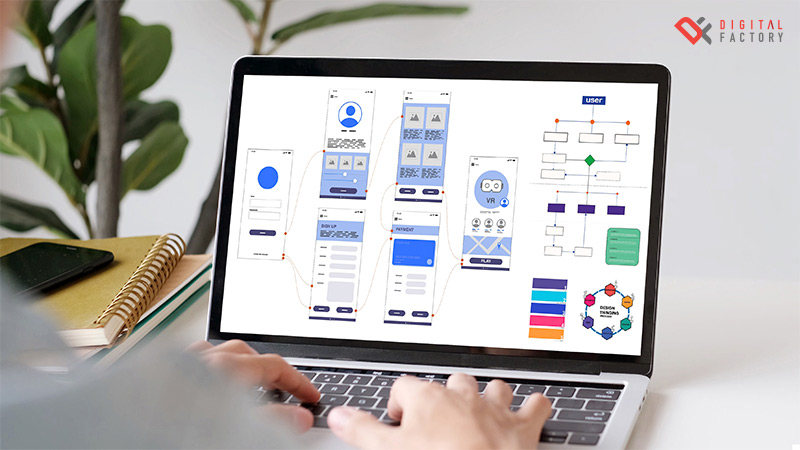
Wireframe tools are essential for designers and developers when creating digital products. They help visualize structure and user flow clearly before actual development begins. Here are some popular tools used for wireframe design:
- Figma – One of the most popular tools today. It is user-friendly, feature-rich, supports real-time collaboration, and offers a wide range of plugins.
- Adobe XD – A powerful tool from Adobe. Its features are similar to Figma, but it is especially suitable for users familiar with Adobe products.
- Sketch – Popular among UI/UX designers, focusing on clean design, ease of use, and high performance.
- Balsamiq – Easy to use and ideal for beginners, mainly focused on creating low-fidelity wireframes.
- InVision – Not only for wireframing but also for building interactive prototypes to test usability.
- Miro – A collaboration-focused tool that allows teams to create wireframes, flowcharts, and diagrams together.
- Lucidchart – A diagramming tool that can also be used for wireframing, helping present complex ideas in a clear and visual way.
Benefits of Having a Website
Having a website today is like owning a storefront in the online world. It is a key channel for reaching customers and expanding your business to a wider target audience. Beyond that, here are additional business benefits of having a website:
1. Build a Strong Brand Image
A professionally designed website enhances your business credibility and reflects attention to detail. It also helps establish a unique brand identity, making your business stand out from competitors.
2. Increase Sales and Revenue
A website serves as a direct channel for selling products and services. It also allows you to implement various online marketing strategies such as SEO, Google Ads, and social media marketing. These tools help you better understand customer behavior and refine your marketing strategies for greater effectiveness.
3. Improve Operational Efficiency
A website streamlines business operations, from receiving orders to processing automated payments. It also helps organize customer data efficiently, making data management easier and enabling you to track marketing performance clearly. This allows your business to optimize strategies more precisely and effectively.
Conclusion
In summary, wireframes are essential tools in digital product development. They help businesses reduce development costs and increase revenue opportunities.
Working with a strategic planning consultant further enhances the process, enabling you to create products that truly meet customer needs and achieve business goals effectively.
Wireframes also allow for continuous testing and improvement, ensuring that your product responds to market demands in the best possible way.