
Have you ever wondered why some advertisements feel especially trustworthy, while others seem like just another sales pitch? The answer may lie in the difference between “PR” and “Advertorial.”
This article will guide you through what PR and Advertorial are, helping you understand their differences and how to apply them effectively in your marketing strategy.

What is PR?
PR stands for Public Relations. It is a communication process used by organizations or individuals to build and maintain positive relationships with the public. The main goals of PR are to create a strong and positive brand image, foster accurate understanding of products or services, and build trust among target audiences.
What Are the Functions of PR?
The functions of PR (Public Relations) can be divided into five main responsibilities: building and maintaining a positive image, communicating information, crisis management, relationship building, and supporting sales. The details are as follows:
1. Building and Maintaining a Positive Image
Creating and maintaining a positive image is at the core of PR. A strong reputation influences the decisions of customers, employees, investors, and other stakeholders.
Example of building and maintaining a positive image: Organizing CSR (Corporate Social Responsibility) activities such as community clean-up projects, donations, hosting sports events to strengthen community relationships, or publishing sustainability reports to demonstrate corporate social and environmental responsibility.
2. Communicating Information
Information communication allows organizations to deliver accurate, clear, and engaging messages to their target audiences effectively. This ensures mutual understanding and fosters positive relationships with all stakeholders.
Example of communicating information: Issuing press releases when launching a new product, holding press conferences to announce important updates such as executive changes or mergers, or responding to customer inquiries through social media channels.
3. Crisis Management
Crisis management is a crucial PR responsibility, as unexpected situations can arise for organizations of any size. Effective crisis management helps minimize potential damage to the organization’s reputation and public image.
Example of crisis situations an organization may face: Defective or harmful products, employee misconduct or illegal activities, or the spread of false rumors about the organization.
4. Building Relationships
Establishing strong relationships with key audiences—such as customers, employees, investors, and the media—enhances credibility, strengthens brand image, and supports long-term success.
Example of relationship building: Organizing community engagement activities, creating online communities where customers can interact and share experiences, or producing internal newsletters to communicate company updates to employees.
5. Supporting Sales
Although PR is often associated primarily with image-building, supporting sales is also part of its function. PR activities can effectively increase awareness and interest in a company’s products or services.
Example of sales promotion activities: A coffee shop offering a “Buy 1 Get 1 Free” promotion in the afternoon, a telecommunications company providing a free smartphone with a monthly subscription plan, or a cosmetics brand hosting makeup workshops and giving away free samples.

What is an Advertorial?
An advertorial is a form of advertising that blends editorial content (informative, news-style writing) with promotional content (advertisement) to promote a product, service, or brand.
It is designed to resemble a regular article in a newspaper, magazine, or website. However, in reality, it is paid content created by the advertiser to promote their own products or services.
Techniques for Writing an Advertorial
As mentioned earlier, an advertorial combines informative editorial content with product or service promotion. Unlike traditional advertising, it focuses more on building credibility and relationships with consumers rather than direct selling. Therefore, writing an effective advertorial requires specific techniques to achieve the best results, as outlined below:
1. Define Objectives and Target Audience
First, clearly determine what you want the advertorial to achieve—such as increasing sales of a new product or raising awareness of a new service. Then, analyze your target audience to understand their behaviors and needs. This will help you choose the right language and craft content that resonates with them.
2. Choose an Engaging Topic
The topic should relate to the product or service you want to promote while also addressing real problems or needs of your target audience. Using compelling language that sparks curiosity will make your headline stand out and attract readers.
3. Provide Valuable Content
Offer useful information such as tips, advice, or relevant statistics to help readers gain knowledge and better understand your product. Clear and simple language ensures smooth readability.
Incorporating storytelling related to the product can also create an emotional connection between the reader and the brand, turning your advertorial into not just a marketing tool, but a relationship-building asset.
4. Integrate the Product Naturally
Avoid hard selling or overly aggressive language. Instead, seamlessly weave the product into the content and focus on the benefits consumers will receive.
5. Use a Clear Structure
A strong advertorial should have clear headings and logical flow. Keep paragraphs concise for easy reading, and include a conclusion that reinforces key points and encourages action—such as visiting a website or making an inquiry.
6. Enhance Credibility
Support your claims with statistics or research data. Cite reliable sources and use relevant, high-quality visuals to strengthen trust and professionalism.
7. Proofread and Revise
Check the accuracy of information and grammar. Review the content carefully to ensure it is easy to understand and communicates your message clearly.
Conclusion
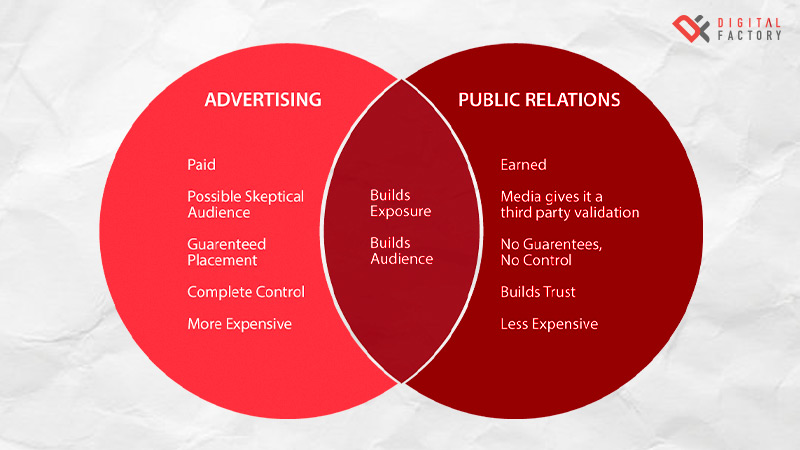
In summary, both PR and Advertorial play important roles in communicating with target audiences, but they differ in objectives and approach. The choice between PR and Advertorial depends on an organization’s goals and budget.
If the goal is to build long-term relationships and maintain a strong brand image, PR should be prioritized. However, if short-term, measurable results—such as increasing sales—are the focus, Advertorial can be used alongside PR for greater impact. If you are looking for comprehensive online marketing services, including social media management, Google Ads, SEO, PR, and Advertorial solutions to strengthen your brand and boost sales, Digital Factory is ready to support your business growth sustainably.